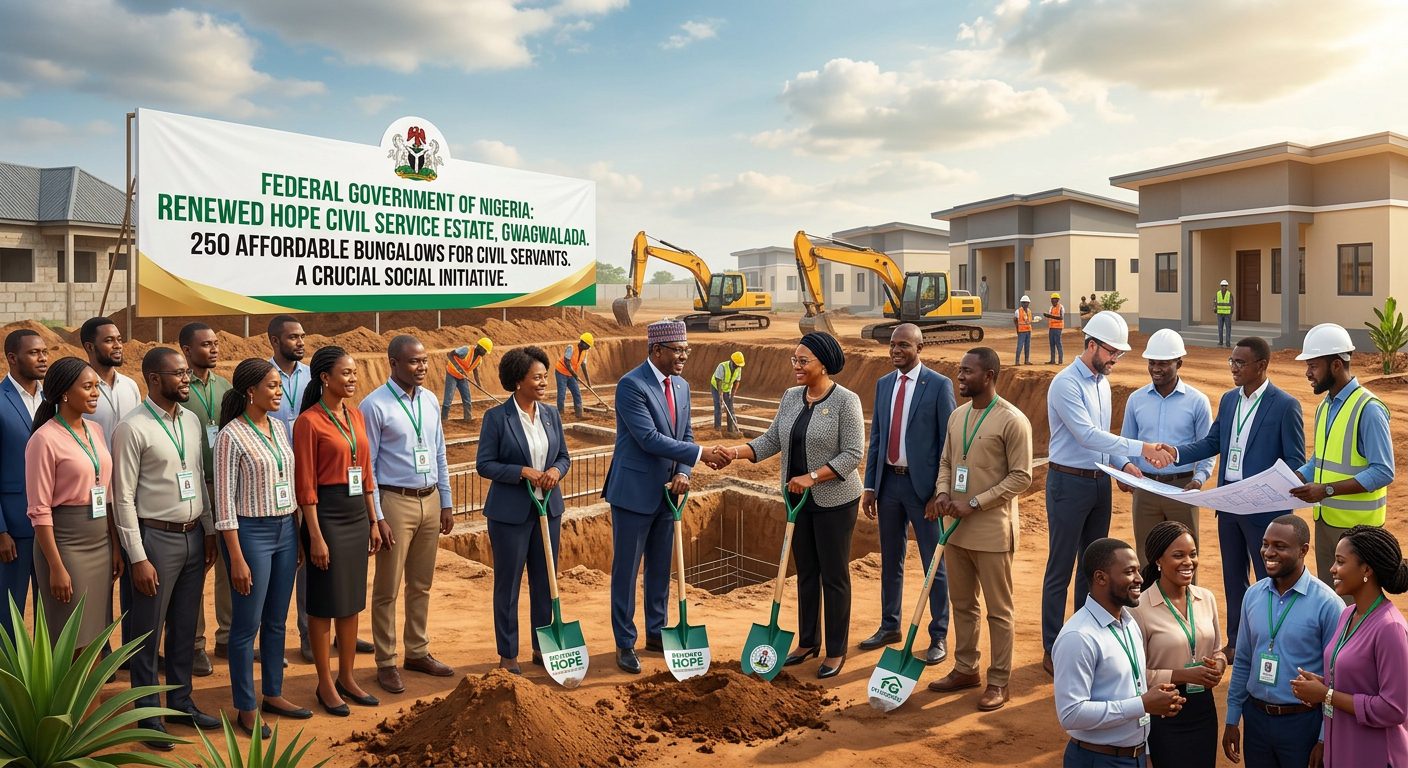
As reported in the mainstream media across Nigeria, the Federal Government of Nigeria has officially kicked off the construction of 250 units of two-bedroom bungalows in Gwagwalada, Abuja, designated as the Renewed Hope Civil Service Estate. Spearheaded by the Federal Ministry of Housing and Urban Development in partnership with the Office of the Head of the Civil Service of the Federation, this social intervention aims to address the urgent residential needs of public sector workers.
The Minister of Housing and Urban Development, Muttaqha Darma, noted as reported that the project forms part of a broad nationwide initiative covering all 36 states and the Federal Capital Territory. Designed specifically for those who form the operational backbone of the state, this social policy ensures civil servants, alongside teachers, healthcare workers, and public administrative officers, can access dignifying, affordable shelter.

Engr. Dr. Muttaqha Rabe Darma, the Minister of Housing and Urban Development, Nigeria. Image source: The Guardian Nigeria News
Impact of the Renewed Hope Housing Initiatives on the Sector
The Renewed Hope Housing Programme serves as a catalyst for economic revitalization across the Nigerian building and construction sector. By initiating projects of various scales, ranging from Renewed Hope Cities to localized Renewed Hope Estates, the government has stimulated local manufacturing and supply chains.
Demand for local construction materials like cement, iron rods, roofing sheets, aggregates, and timber has surged directly as a result of these housing projects across the country. Furthermore, contractor mobilization, site labor engagement, and localized equipment procurement have driven immediate job creation, providing skilled and unskilled artisans, site engineers, and trade vendors with sustained income streams.
Delivery Milestones and Mandates Ahead
Report has it that, the Ministry of Housing has mapped out direct project timelines aimed at systematically handing over completed housing units to beneficiaries up to May 2027.
- Delivery of 132 rent-to-own housing units to beneficiaries within the month.
- Delivery of 252 units in Ibeju-Lekki, Lagos State, alongside an additional 300 units in Abuja.
- Delivery of 1,500 housing units to Nigerian citizens across target sites.
- Delivery of 2,800 housing units situated in the Karsana area of Abuja.
- Rollout of another set of 2,129 completed housing units nationwide.
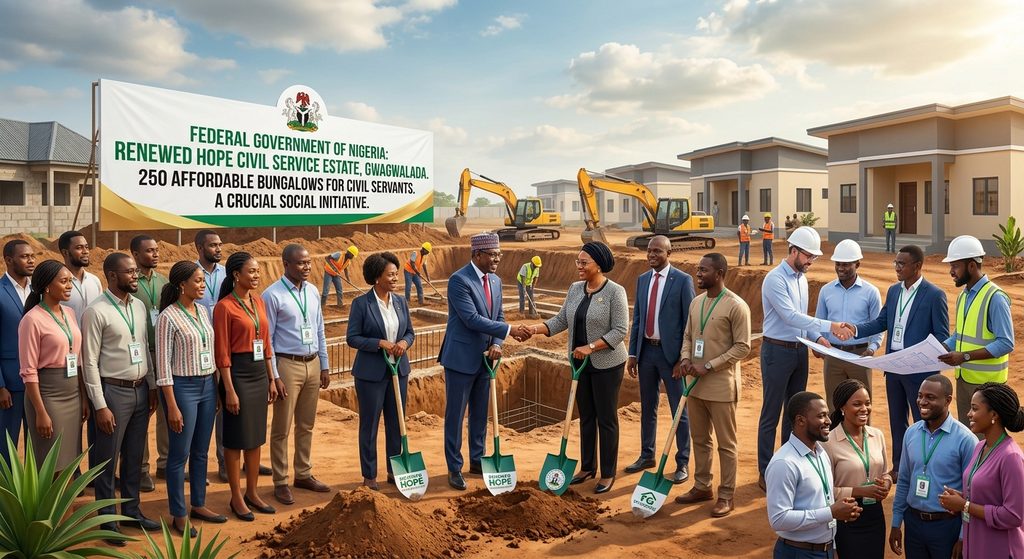
A Gemini AI generated image as illustration to support the story.
Comfort, Efficiency, and Welfare Impact on Public Servants
Access to decent, stable, and affordable housing carries a direct correlation with worker morale, public sector integrity, and service delivery efficiency. Providing civil servants with secure homeownership reduces financial stress caused by exorbitant urban rents.
The Head of the Civil Service of the Federation, Didi Walson-Jack, highlighted as reported that offering secure residential options brings long-term stability and peace of mind to workers and their dependents. Eliminating housing insecurity discourages corrupt tendencies, increases workforce focus, and restores pride and dignity to public administration.

Mrs. Didi Esther Walson-Jack, the Head of the Civil Service of the Federation, Nigeria. Image source: The Sun Nigeria
Tackling the National Housing Deficit: Strategic Recommendations
While ongoing government developments represent meaningful progress, tackling Nigeria’s structural housing deficit requires systemic reform and long-term policymaking.
- Land Tenure and Title Registration Reforms: Streamlining land allocation processes and speeding up the issuance of Certificates of Occupancy (C of O) nationwide to reduce land acquisition bottlenecks.
- Expanding Mortgage and Finance Options: Strengthening housing finance frameworks, expanding single-digit interest mortgage access, and scaling targeted rent-to-own models for low- and middle-income earners.
- Encouraging Local Material Manufacturing: Granting fiscal incentives, tax breaks, and research grants to domestic manufacturers of modern construction materials to reduce heavy reliance on costly imported building products.
- Infrastructure Provision to Target Sites: Ensuring primary infrastructure, such as access roads, electricity grids, water supply, and drainage, is extended to new development zones before or alongside building activities to lower overall development costs.
Partnering with Professional Stakeholders: The Role of Architects
To ensure housing projects stand the test of time, the Federal Government must deepen its strategic collaboration with key professional bodies, particularly architects and urban planners. Architects serve as primary visionary stakeholders responsible for transforming government targets into safe, functional, and aesthetically viable realities.
Engaging professional architectural institutes enables the government to deploy climate-resilient designs, maximize space utilization, optimize material usage, and integrate green building techniques. Involving architects from conceptualization through site monitoring guarantees quality control, safeguards structural integrity, prevents project failures, and ensures government funds translate into durable housing stock.
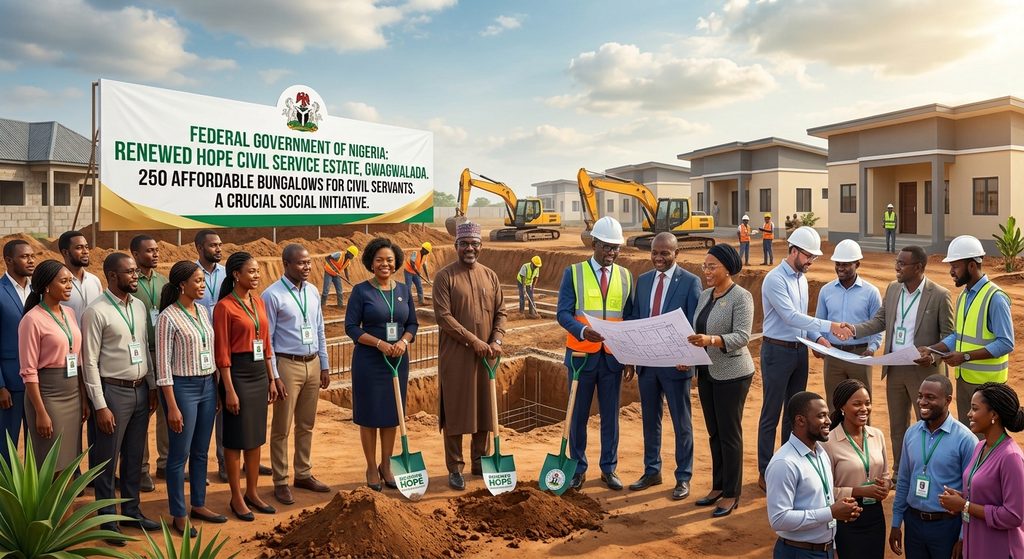
A Gemini AI generated image as illustration to support the story.
Is Future Affordable Housing Achievable in Nigeria?
Achieving long-term affordable housing in a developing nation like Nigeria is entirely realistic, provided government interventions transition from isolated physical construction projects into holistic, ecosystem-wide policy frameworks.
Through sustained Public-Private Partnerships (PPPs), innovative financing, local material utilization, strict adherence to professional design standards, and dedicated civil service welfare initiatives, Nigeria can establish a scalable model that balances rapid urbanization with affordable, dignified, and quality shelter for all citizens.
Alex Kabiru
Architecture Editor, Buildace Magazine