Our Insights
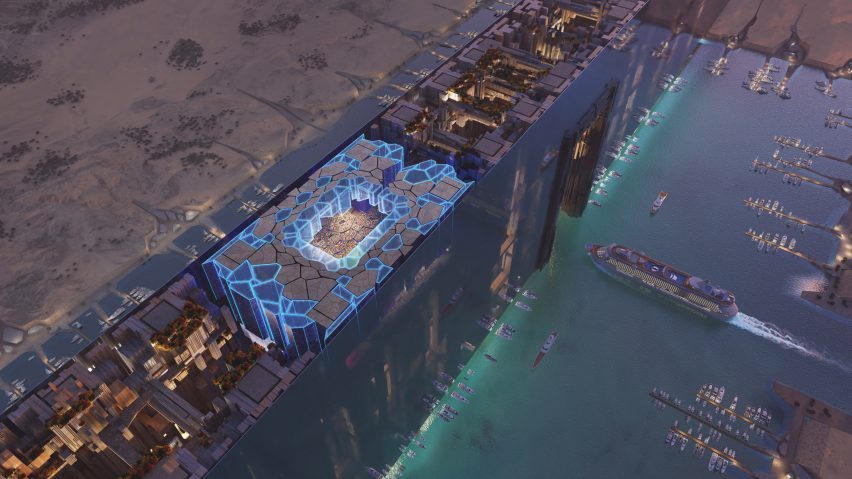
As reported by architectural publication Dezeen, Saudi Arabia has quietly placed its high-profile Neom Stadium on hold indefinitely, drawing from reports originally uncovered by Reuters. Intended as a dramatic centerpiece for the 2034 FIFA World Cup, perched suspended 350 meters above the ground within the mega-structure known as The Line, the 46,000-seat arena was one of 15 planned venues designed to demonstrate the Kingdom’s futuristic urban vision.
The abrupt halt to the venue reflects broader systemic and operational challenges surrounding the region’s overall development strategy. Following the news, at Buildace Magazine, we took a critical look at the stadium in line with The Line project and highlighted some of the reasons and concerns that led to the project halt, like Scaling Back The Line, Escalating Budgetary and Logistics Constraints and more.
Scaling Back The Line
Neom Stadium was engineered specifically as an anchor piece for The Line, a proposed 170-kilometer-long linear skyscraper city. However, repeated scope reductions and realities on the ground forced developers to dramatically pull back initial target lengths and population projections for 2030. Because the venue was visually and structurally integrated directly into the city’s superstructure, setbacks to the linear city naturally made constructing an elevated stadium practically unviable.
Escalating Budgetary and Logistics Constraints
Building a complex, 46,000-seat sports arena suspended hundreds of meters in the air presented extraordinary engineering hurdles and surging cost estimates. Financial pressures across the broader Neom gigaproject have led organizers to prioritize core infrastructure and re-examine massive capital expenditures, leading to widespread organizational cutbacks and project recalibrations.
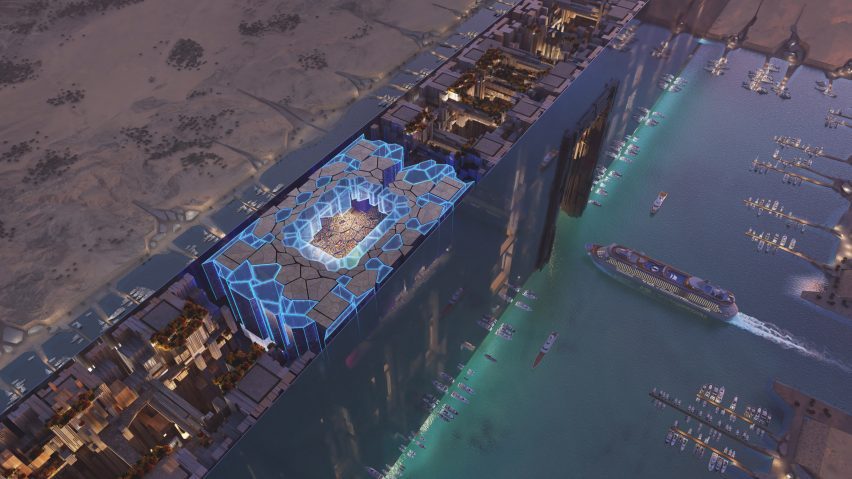
Image source: Dezeen
Realignment of World Cup Priorities
Saudi Arabia remains committed to hosting the 2034 World Cup, but the decision to pause Neom Stadium highlights a strategic shift toward host venues in established metropolitan areas like Riyadh or Jeddah. Focusing resources on traditional, ground-level stadium builds reduces construction risks and guarantees delivery well ahead of FIFA deadlines.
Broader Setbacks across the Megacity Project
The stadium’s indefinite pause is not an isolated event. As Dezeen noted, the decision follows other major adjustments across the Neom master plan, including cancellations of other planned international sporting events and severe labor adjustments across the flagship development.
Alex Kabiru
Architecture Editor, Buildace Magazine