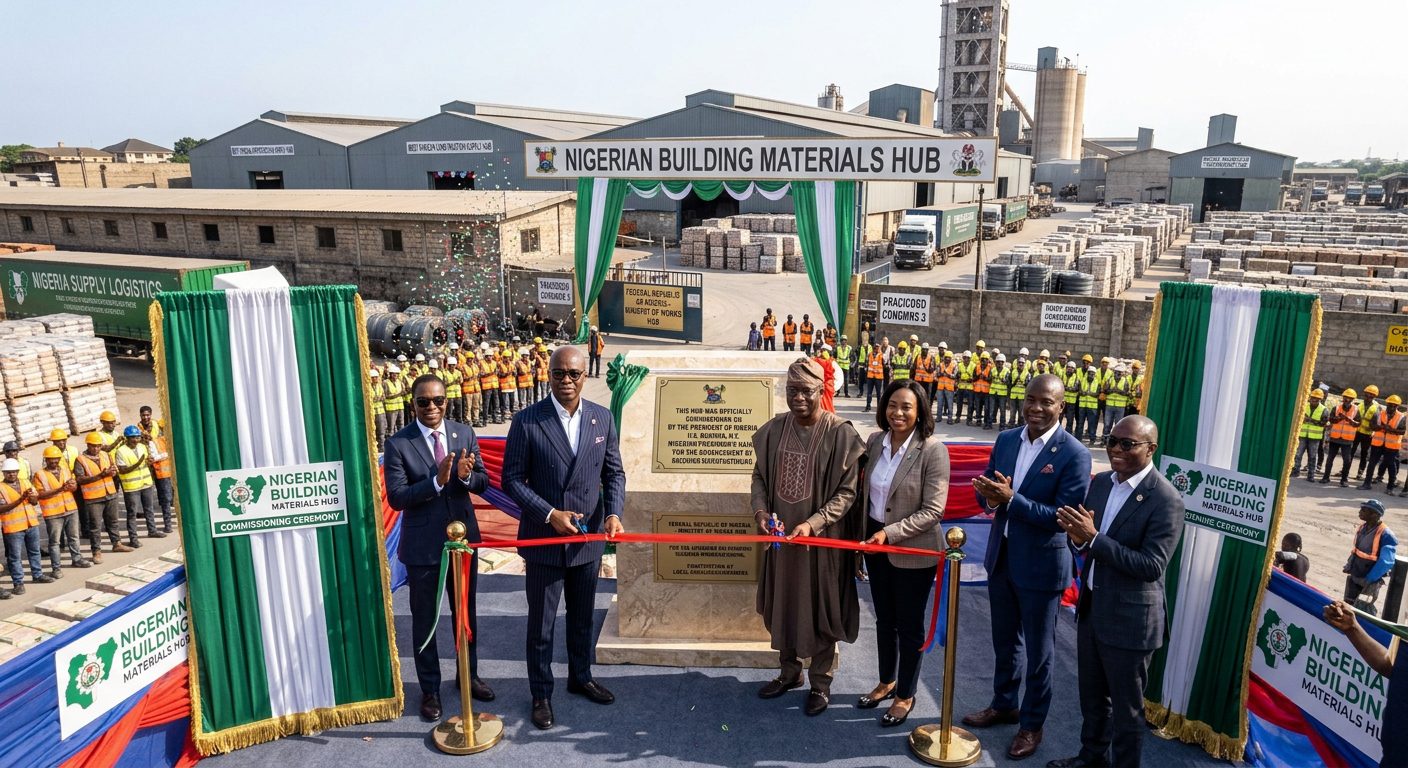
The Federal Government of Nigeria has recently unveiled a radical and bold initiative aimed at revolutionizing the national housing landscape by establishing specialized Building Materials Manufacturing Hubs across all six geopolitical zones. As reported across mainstream media in Nigeria, Senator George Akume, the Secretary to the Government of the Federation described the initiative as a strategic move designed to aggressively boost domestic production, curb the soaring costs of construction, and expand access to safe and affordable housing for citizens nationwide.
This federal drive represents a decisive shift toward strengthening domestic supply chains and reducing heavy reliance on expensive imported inputs. By decentralizing manufacturing across the geopolitical zones, the initiative targets the root causes of the national housing deficit, promising a powerful dividend for the economy and the real estate market.

Senator George Akume, the Secretary to the Government of the Federation. Images source: Vanguard News
Rethinking Construction Costs, Rents, and Tenancy Dynamics
High construction expenses have long driven up property acquisition costs, which in turn push residential and commercial rents to unsustainable levels. By establishing localized manufacturing hubs, the initiative directly tackles these escalating costs. Increasing the supply of affordable, locally produced materials will reduce overall build expenses, easing pressure on developers and property owners.
A drop in construction costs lays the groundwork for lower, more stable rental rates across urban and rural centers. Furthermore, a shift toward affordable housing helps resolve deep-seated landlord and tenancy friction. Lower capital expenditure allows property owners to achieve reasonable investment yields without imposing exorbitant rent hikes, creating a far more stable and equitable environment for tenants.
Unlocking Economic Benefits for Nigerians and Local Industry
The economic impact of this initiative reaches far beyond construction sites:
- Affordable Housing Dividend: Lowering baseline costs makes home ownership attainable for millions of working families, delivering real security, dignity, and wealth creation.
- Empowering Local Builders: Local contractors gain consistent access to quality-tested inputs, allowing them to compete fairly, deliver projects on time, and build sustainable businesses.
- Boosting Material Traders: Building materials traders and suppliers benefit from established domestic supply pipelines, reducing foreign exchange risks, transport bottlenecks, and inventory delays.
- Job Creation and Skills Development: Developing regional hubs creates direct industrial jobs and fuels extensive vocational opportunities for artisans, skilled laborers, and technicians.
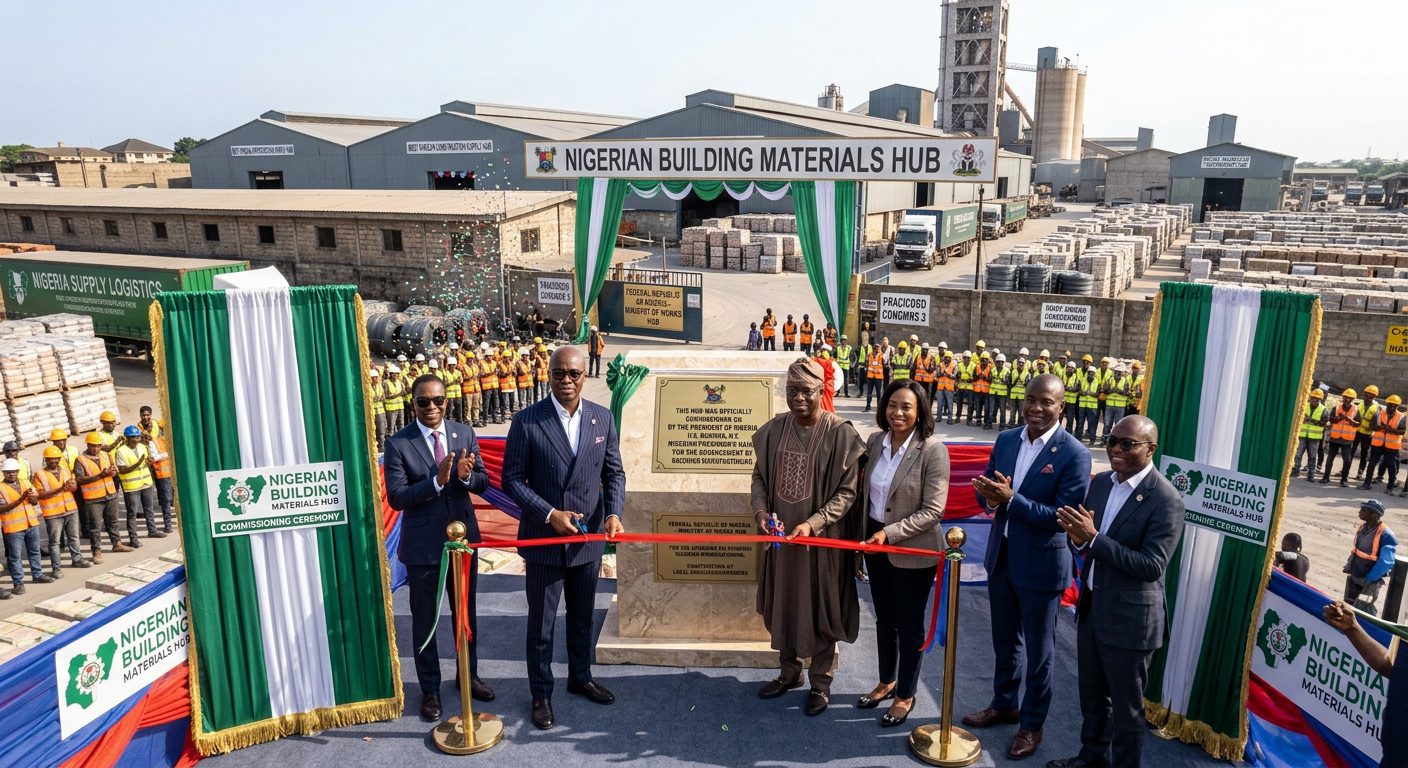
A Gemini AI generated image to illustrate the article.
Strategic Stakeholder Roles and Public Safety
Realizing the full potential of this initiative requires deep collaboration across the built environment sector. Professional bodies, including the Nigerian Institute of Builders, are urged to bring their research capacities, technical expertise, and professional networks to policy development and project delivery.
To protect lives and physical investments, industry leaders must maintain zero tolerance for substandard materials, poor site supervision, construction shortcuts, and quackery. Certified professionals must ensure their credentials and seals are tied exclusively to rigorously supervised projects.
Equally critical is the development of auditable quality-management systems, professional consortia, and continuous certification programs for artisans. Broad industry cooperation, focused on modern build techniques, transparent bills of quantities, bulk procurement, and waste reduction, remains fundamental to sustaining this transformation.
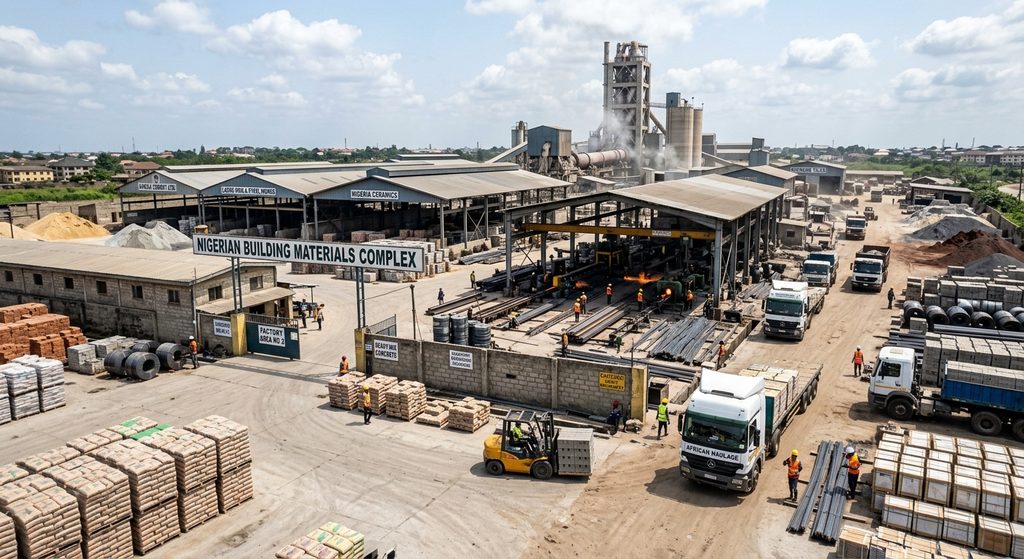
A Gemini AI generated image to illustrate the article.
Connecting Housing with National Infrastructure
The manufacturing hubs are designed to operate alongside the Federal Government’s major national infrastructure programs. With thousands of kilometers of highways and arterial roads undergoing construction, rehabilitation, or expansion, integrated transport networks will ensure the efficient distribution of locally produced building materials to markets nationwide.
Major road corridors, including the Lagos–Calabar Coastal Highway, the Sokoto–Badagry Superhighway, the Abuja–Kaduna–Zaria–Kano Road, and the East–West Road, provide the physical backbone needed to transport raw and finished materials quickly across every region.
What the Future Holds
Looking ahead, this industrial strategy signals a transformative era for Nigeria’s real estate and construction sectors. By shifting the nation from an import-dependent market to a self-sufficient manufacturing base, the Federal Government sets the stage for long-term economic stability, vibrant local industries, and universal access to dignified housing. As these geopolitical hubs come online, they hold the potential to redefine national housing delivery and serve as an enduring model for infrastructure-driven economic growth.
Alex Kabitu
Architecture Editor, Buildace Magazine