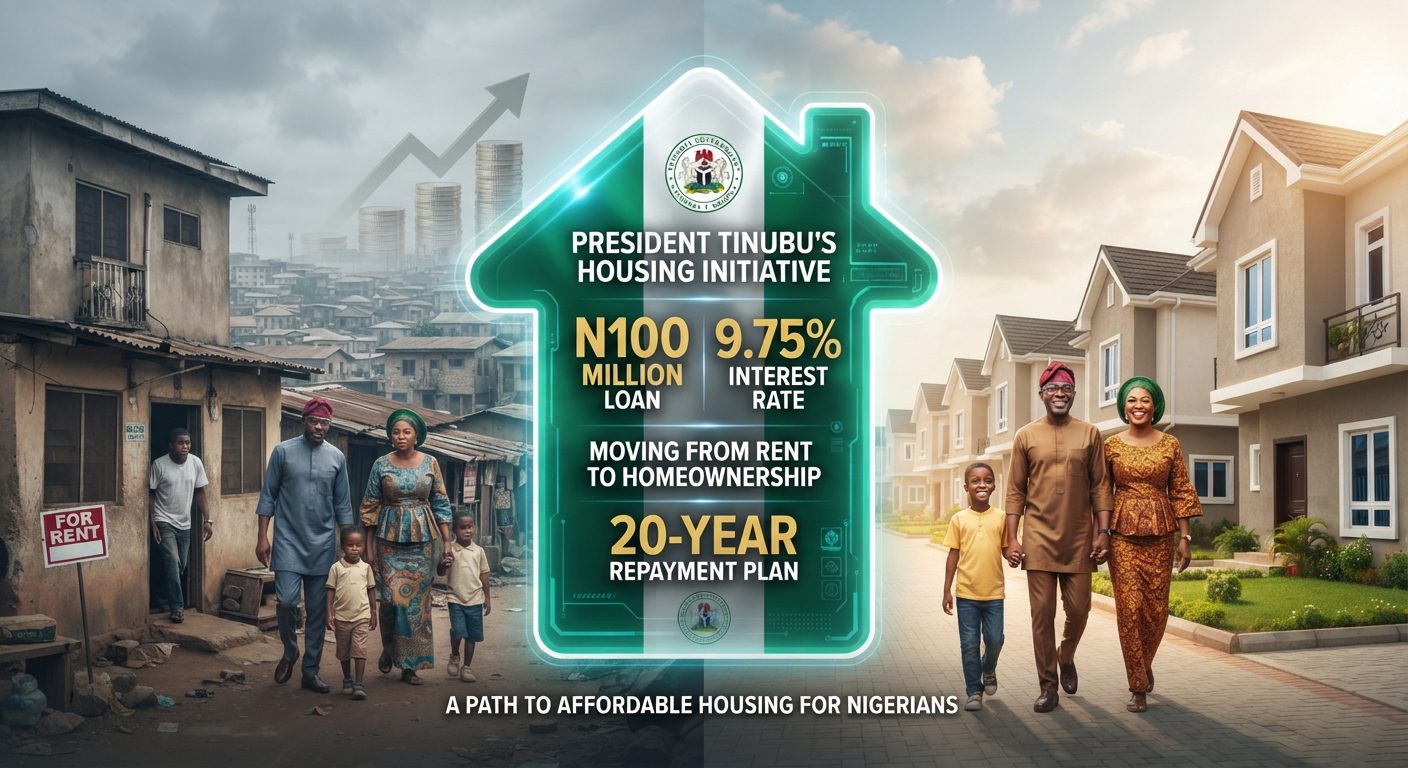
In a major policy announcement shared via his official X handle (@officialABAT), President Bola Tinubu has unveiled an ambitious housing finance intervention designed to break the cycle of lifelong renting for millions of citizens. By offering eligible Nigerians access to mortgages of up to ₦100 million at a single-digit, fixed interest rate of 9.75 percent over a 20-year repayment period, the Federal Government is attempting to fundamentally reshape the nation’s real estate landscape.
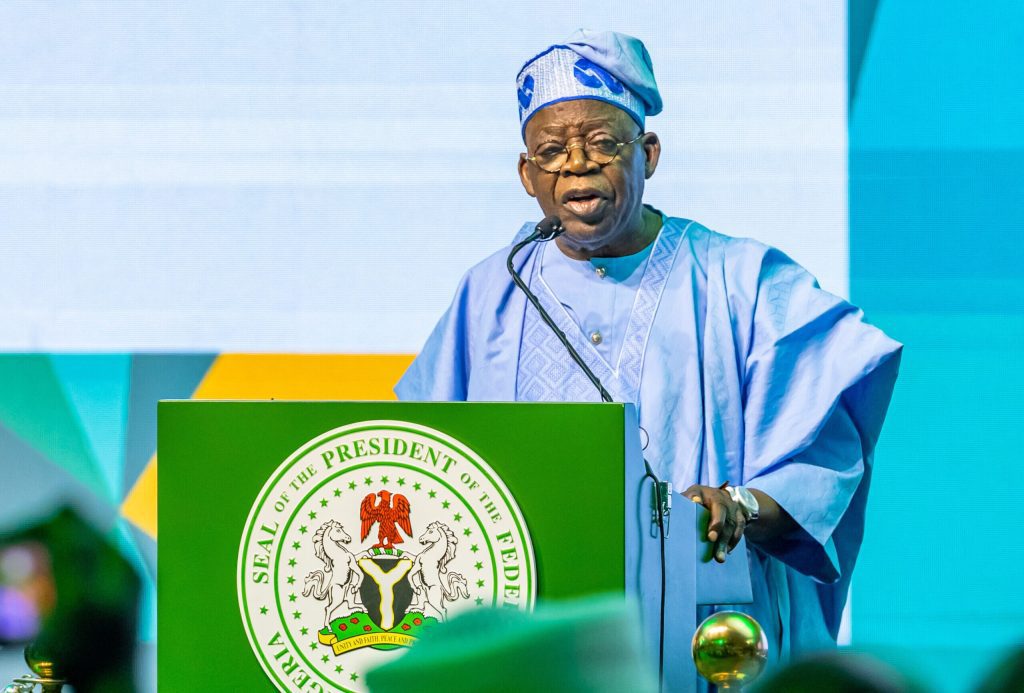
Bola Ahmed Tinubu, President of Nigeria.
Understanding Nigeria’s Housing Deficit Crisis
To appreciate the weight of this intervention, one must look at the sheer scale of Nigeria’s shelter crisis. According to official 2026 Federal Government data validated through international housing indexes, Nigeria faces a quantitative housing deficit of approximately 15 million units, while broader industry estimates that factor in substandard and overcrowded dwellings place the crisis closer to 28 million units. With a rapidly growing population and relentless urban migration into hubs like Lagos, Abuja, and Port Harcourt, the country needs to build upwards of 550,000 to 700,000 homes annually just to keep pace. Historically, commercial mortgage rates hovering between 18 and 28 percent have locked out everyday earners, forcing nearly 70 percent of prospective buyers to rely on personal savings or informal payment plans.
Everything Nigerians Need to Know About the ₦100M Loan
Backed by the ₦1 trillion Ministry of Finance Incorporated Real Estate Investment Fund (MREIF), the newly highlighted scheme dramatically lowers the barrier to property ownership. Instead of commercial bank rates that double the cost of a home within a few years, beneficiaries enjoy a locked-in 9.75 percent annual interest rate with a 10 percent minimum equity deposit.
To put this into practical perspective, a Nigerian looking to purchase a ₦10 million home only needs to provide an initial deposit of ₦1 million. The remaining balance is spread across two decades at roughly ₦85,400 per month, an amount comparable to what many urban dwellers currently pay in rent without ever gaining equity. Furthermore, the President highlighted complementary avenues for different income brackets, including the revamped Federal Mortgage Bank of Nigeria (FMBN) facility offering up to ₦50 million at a 6 percent interest rate over 30 years, alongside the Family Homes Fund catering to vulnerable, low-income households.
What It Means for Nigerians and Who Is Eligible
For the average working-class Nigerian, this policy shifts homeownership from a retirement-age fantasy to an achievable mid-career milestone. Crucially, President Tinubu emphasized that access is strictly merit- and eligibility-based, stripping away the need for political patronage or “knowing someone in the Presidential Villa.”
To qualify and apply, prospective homeowners must work through accredited Primary Mortgage Banks (PMBs) and participating commercial financial institutions:
- Income and Employment: Applicants must be Nigerian citizens, either salaried employees in the public or private sector or verifiable self-employed business owners, with a steady, documented income stream capable of servicing the monthly repayments.
- Equity Contribution: Applicants must be ready to provide the 10 percent initial down payment. Notably, contributors to the Contributory Pension Scheme (CPS) are legally permitted to draw up to 25 percent of their Retirement Savings Account (RSA) balance to cover this equity deposit.
- Joint Applications: Married couples can pool their financial strength by submitting joint applications, significantly boosting their combined borrowing threshold to secure larger family homes.
- Application Process: Interested buyers must select an approved property from accredited developers or the open market, open an account with an MREIF-participating mortgage bank or an FMBN-accredited institution, submit proof of income, tax clearance, and valid identification, and undergo a standard credit and property title verification.
A Gemini AI generated image as illustration for the article.
Tackling the Deficit and the Role of Architecture
Injecting affordable, long-term liquidity into the demand side of real estate directly stimulates the supply side. When developers know that thousands of middle-income buyers have pre-approved, single-digit mortgages waiting, private capital naturally flows into mass residential construction.
This surge places architecture and urban planning at the center of national development. To ensure these ₦10 million to ₦100 million homes remain truly affordable and livable, Nigerian architects are tasked with pioneering cost-effective, climate-resilient, and modular designs. By championing locally sourced building materials, passive cooling techniques that reduce reliance on expensive grid electricity, and high-density, mixed-use neighborhood layouts, architects can help developers keep construction costs down while elevating the aesthetic and structural quality of mass housing across the federation.
Delivering on Promises and Synergizing Institutional Efforts
Questions have persisted regarding whether the Tinubu administration can fulfill its ambitious target of delivering 100,000 housing units. While physical construction takes time, the administration points to over 15,000 units currently rising under the Renewed Hope Cities and Estates Programme, a target of 77,400 units under the Renewed Hope Social Housing Programme, and targeted humanitarian deliveries, such as 100 free homes handed to widows in Kaduna and 50 to families of fallen military heroes in Ibadan.
More importantly, the ₦100 million MREIF announcement does not exist in a vacuum; it builds directly on recent institutional milestones. Earlier in 2026, MREIF successfully disbursed ₦128 billion in mortgages to 1,859 families, a figure that has now scaled past ₦160 billion across more than 2,300 beneficiaries in 27 states. Simultaneously, this federal momentum complements aggressive private-sector roadmaps, such as AG Mortgage Bank Plc’s (AGMB) five-year strategic push to deliver one million mortgages nationwide by 2030 through cooperative lending, developer finance, and retail home loans. Together, public funds and private mortgage banks are creating a synchronized ecosystem capable of denting the housing backlog.
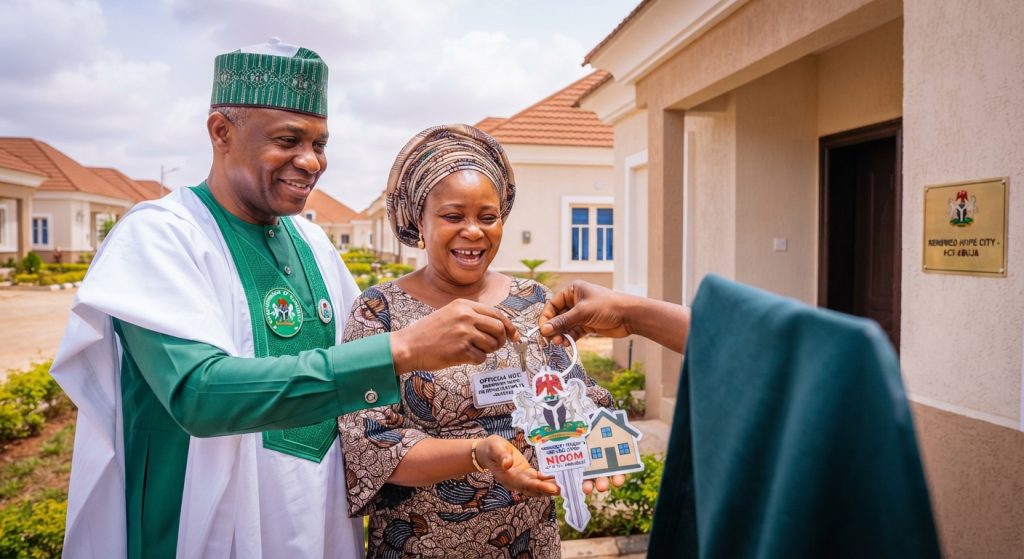
A Gemini AI generated image as illustration for the article.
Election-Season Politics or Renewed Hope Leadership?
With the 2027 general elections steadily approaching on the political horizon, skeptics inevitably view major federal welfare and credit announcements through the prism of campaign strategy. Critics argue that spotlighting accessible ₦100 million loans right as political temperatures rise is a calculated effort to win over a frustrated middle class battered by inflation and high living costs.
However, a closer look at the timeline reveals that MREIF was conceptualized and structured as a core pillar of the administration’s 2023 economic reforms, long before the 2027 campaign cycle began. Raising ₦1 trillion in institutional capital, securing top-tier credit ratings for the fund, and disbursing over ₦160 billion to thousands of families requires years of foundational financial engineering. While the timing undoubtedly carries political benefits for the administration, the structural mechanics of the scheme point to a deliberate, long-term policy instrument under the Renewed Hope agenda aimed at converting macroeconomic reforms into tangible, generational wealth for everyday Nigerians.
Musa Momoh
Editor-in-Chief, Buildace Magazine