All images by Oualalou + Choi, Populous
For decades, football stadiums have been built as massive concrete bowls, functional, imposing, but often culturally detached from the soil they sit on. In the Benslimane province just north of Casablanca, Morocco is radically challenging this template. The construction of the Grand Stade Hassan II is more than just an ambitious $500 million engineering project; it is a masterclass in inventive architecture designed to shift the epicenter of global football toward Africa.
With earthworks complete and construction pushing ahead at full throttle across 24-hour shifts, the 115,000-seat megastructure is officially on track for a late 2027 completion. It isn’t just aiming to be the largest football stadium on Earth, it is positioning itself to host the final of the 2030 FIFA World Cup.
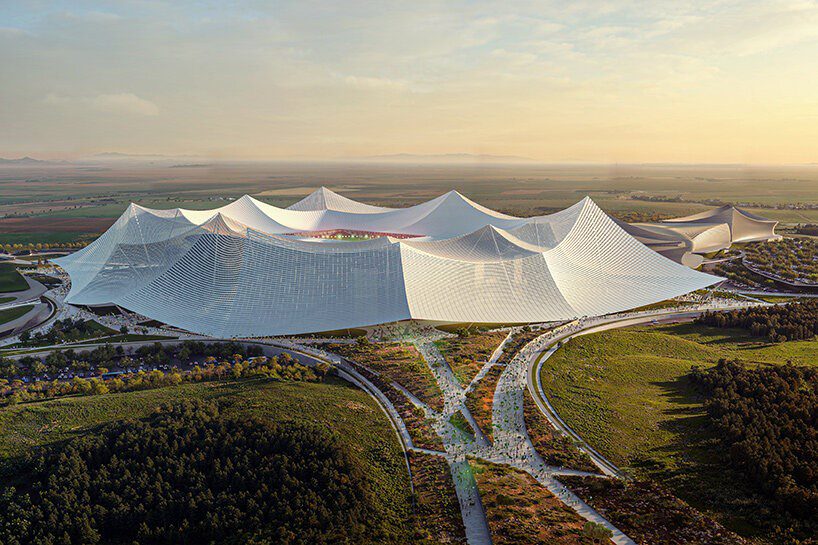
[ARCHITECTURAL SILHOUETTE]
//\\ //\\ //\\
// \\// \\// \\ <– Translucent Aluminum Lattice
//====\\====\\====\\ (Inspired by Moussem Tents)
// \\ \\ \\
==================================================
[3 Tiers/115k Capacity] [32 Gateways]
==================================================
Rewriting the Future of Football Development
A stadium of this magnitude alters the DNA of a nation’s sports ecosystem. Rather than acting as a lonely monolith that sits empty between major international fixtures, the Grand Stade Hassan II is engineered for daily football evolution.
- A New Sanctuary for the Casablanca Derby: The arena will serve as the permanent home ground for Morocco’s twin powerhouse clubs, Wydad AC and Raja CA. Moving one of the most passionate, intense derbies in world football into a high-tech, 115,000-seat coliseum immediately elevates the profile, broadcasting value, and commercial draw of Moroccan club football.
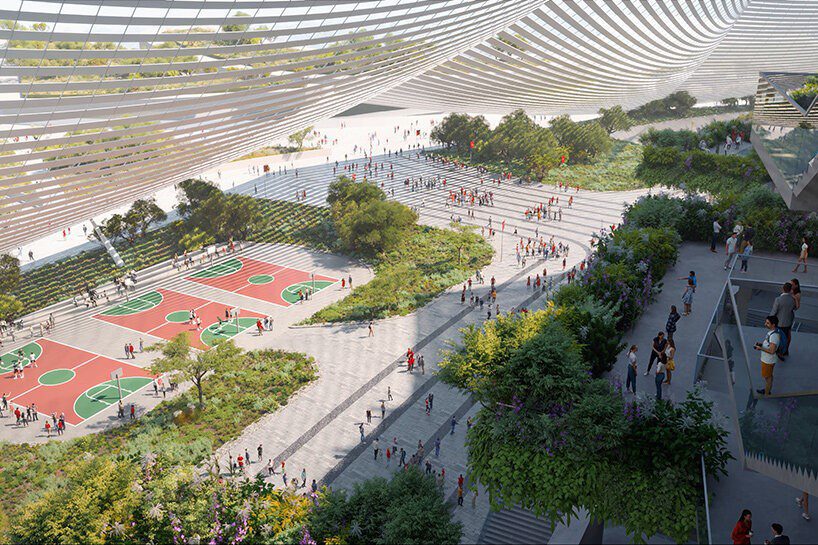
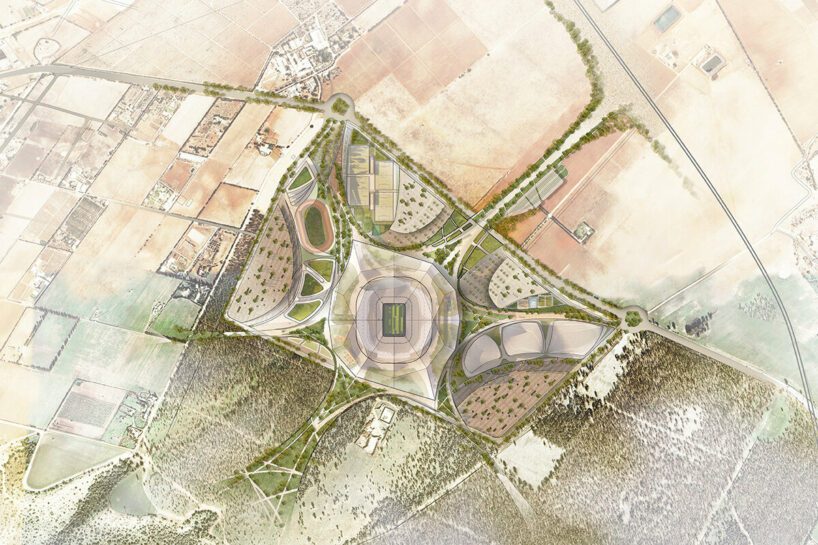
- The “Morocco Sport City” Ecosystem: While the stadium itself is the immediate priority, it anchors a larger 100-hectare sports metropolis. By combining elite training pitches, an athletics stadium, an Olympic-sized swimming pool, and dedicated academies, Morocco is building a high-performance pipeline to develop homegrown talent under the supervision of the Royal Moroccan Football Federation.
- A Shift in Global Football Politics: Africa has only ever hosted one World Cup (South Africa in 2010). By building a venue that physically eclipses Europe’s iconic stadiums, like Madrid’s Bernabéu or Barcelona’s Camp Nou, Morocco is establishing an undeniable architectural argument to host the world’s biggest sporting spectacles.
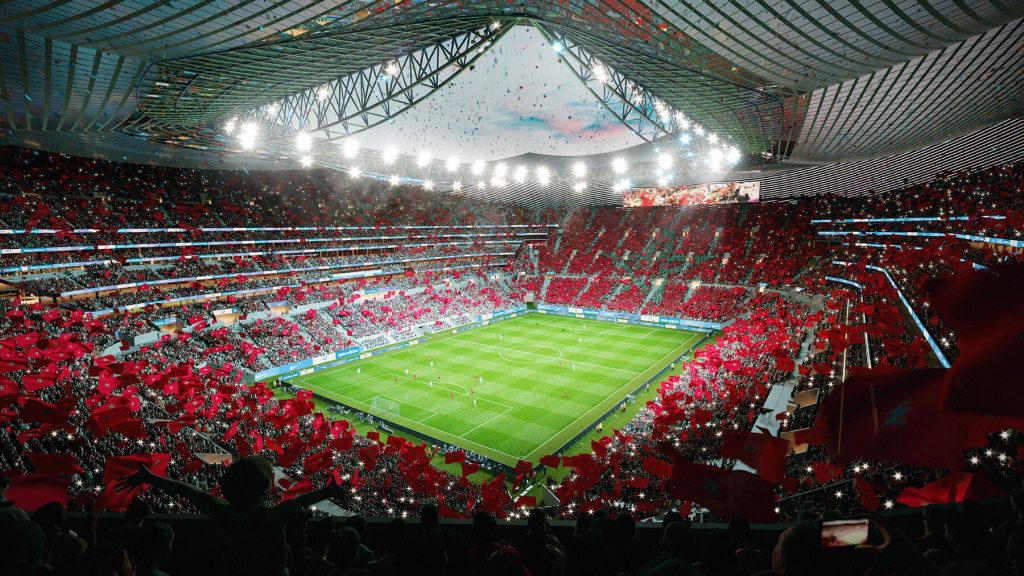
When Inventive Architecture Meets Cultural Identity
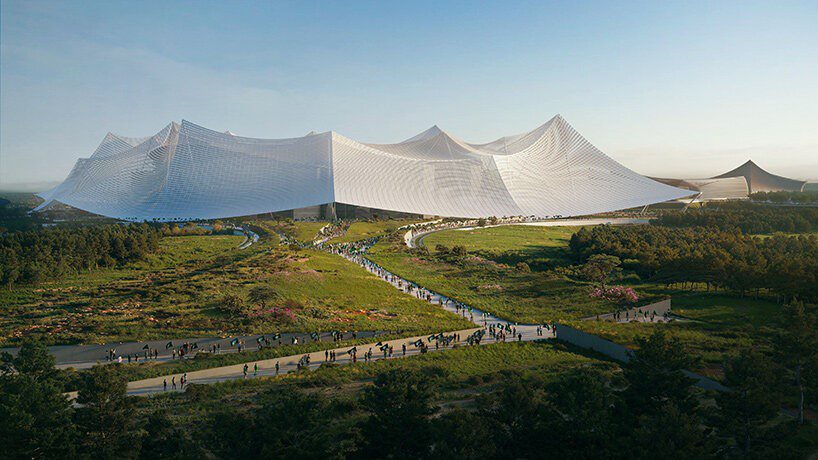
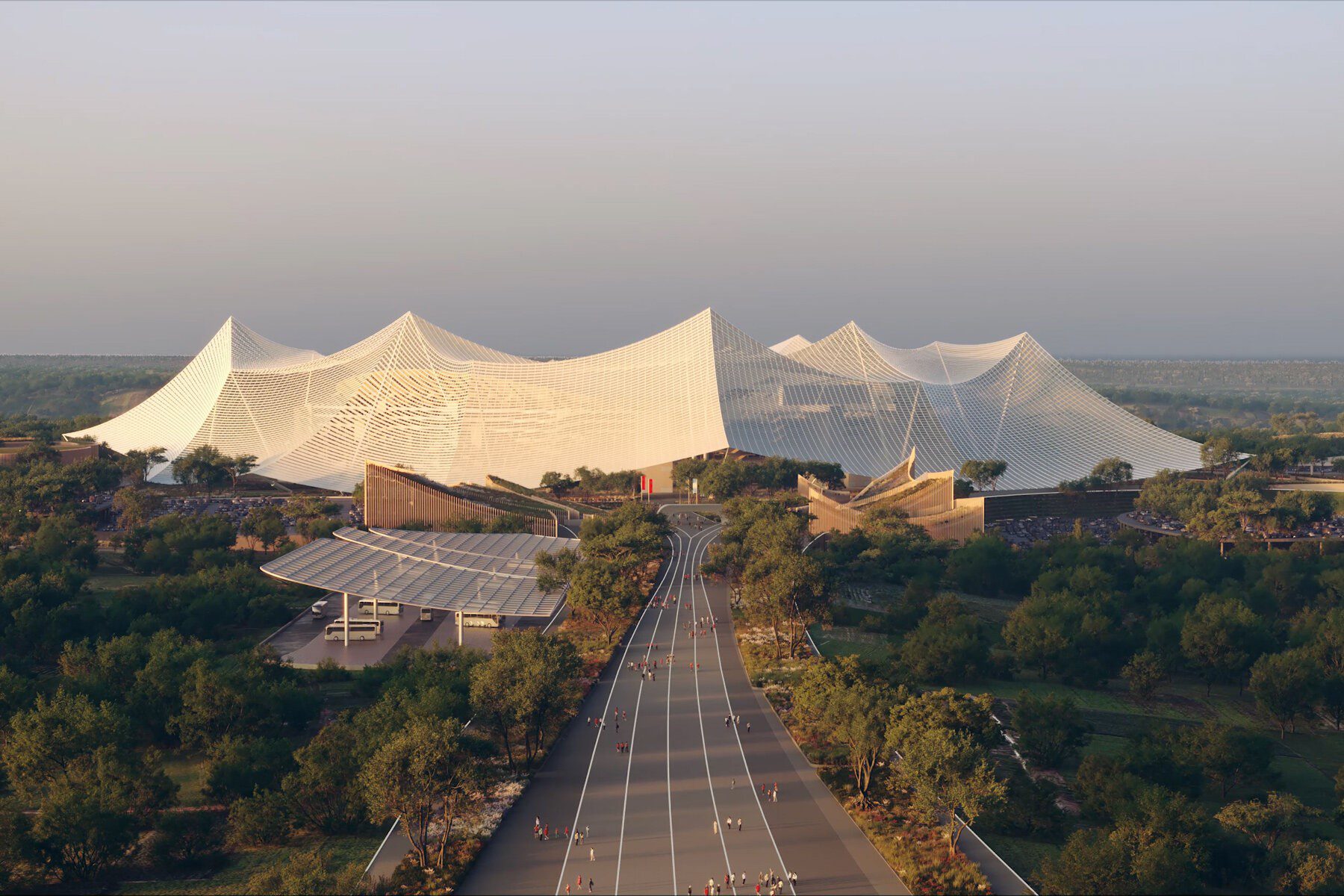
The design team, a powerhouse collaboration between local firm Oualalou+Choi and sports architecture giants Populous, bypassed generic modern templates. Instead, they looked to the Moussem, the traditional Moroccan cultural festival where communities gather under massive, communal tents.
The Engineered Oasis
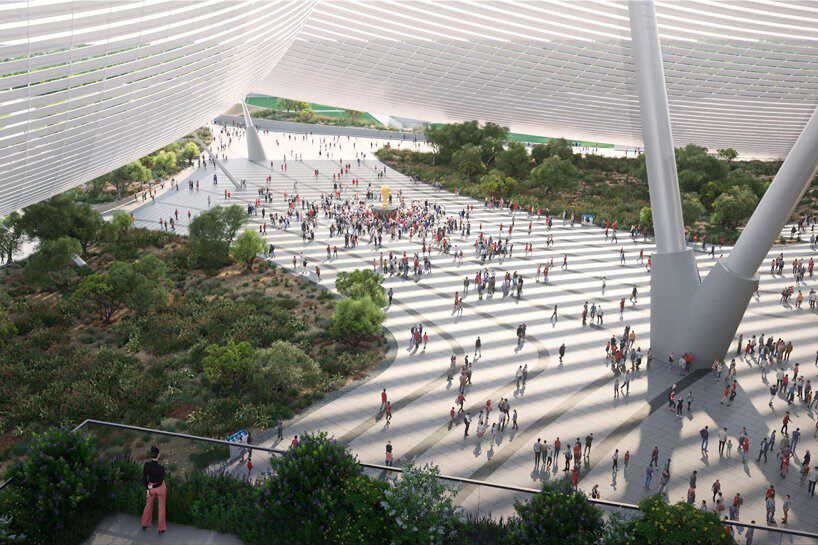
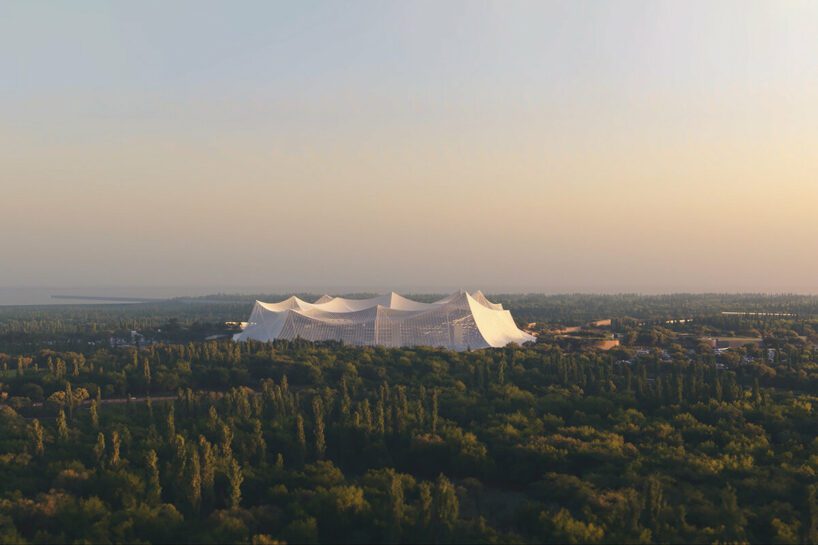
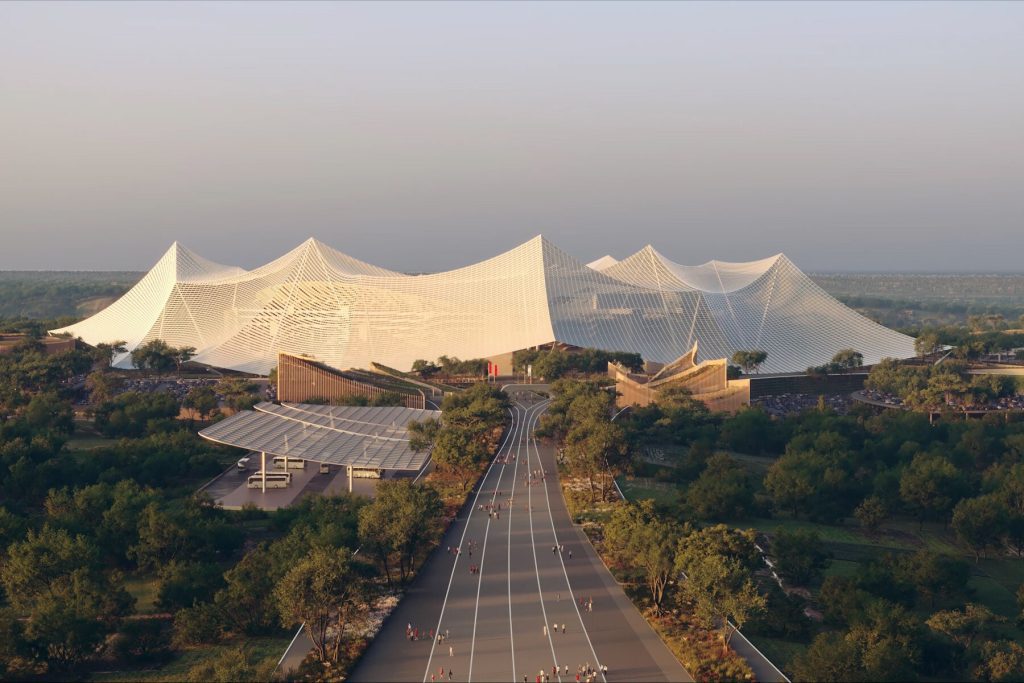
The stadium’s defining feature is its giant, translucent tent-like roof. Crafted from a complex, lightweight aluminum lattice, the roof acts as a climate-controlling canopy that filters natural light, mimics a traditional canvas aesthetic, and seamlessly blends into the surrounding landscape. The structure is anchored by a ring of 32 monumental stairways, which serve a dual purpose: they are structural bones supporting the massive roof, and physical gateways welcoming tens of thousands of fans into the arena.
[MONUMENTAL ENTRYWAY]
_______
/ \ <– Translucent Canopy
/ _ _ \
| | | | | | <– 32 Structural Stairways
| |_| |_| |
/ \ <– Natural Landscape / Oasis Integration
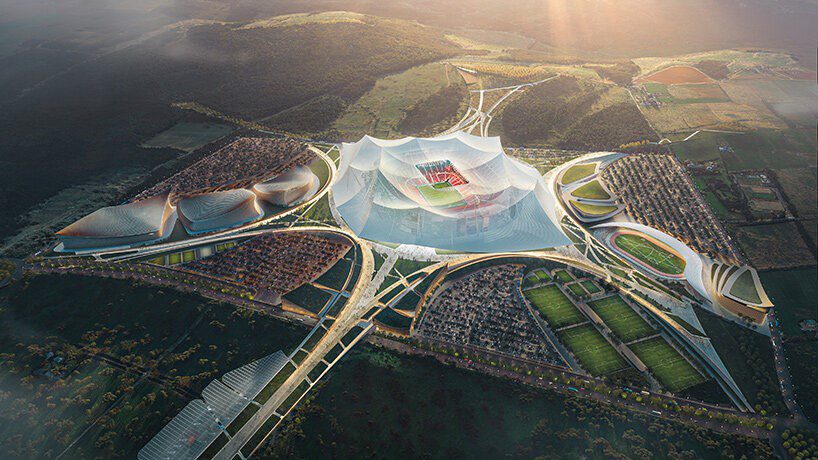
The Seating Blueprint: Pure Atmosphere
Architectural layout dictates crowd energy. To ensure the staggering 115,000-capacity doesn’t feel cold or hollow, the designers engineered an incredibly intimate internal bowl:
- The Fan Walls: Behind each goal, massive three-tiered end stands will hold up to 30,000 passionate supporters each. This vertical stacking keeps fans incredibly close to the pitch, creating a wall of sound designed to mimic the intimidating acoustics of traditional European and South American grounds.
- The Hospitality Hub: Along the main stands, the stadium features five levels of premium hospitality suites and a Royal Box. This tiering ensures the venue meets strict FIFA requirements while securing the corporate revenue streams necessary to make the stadium financially self-sustaining long after the 2030 World Cup ends.
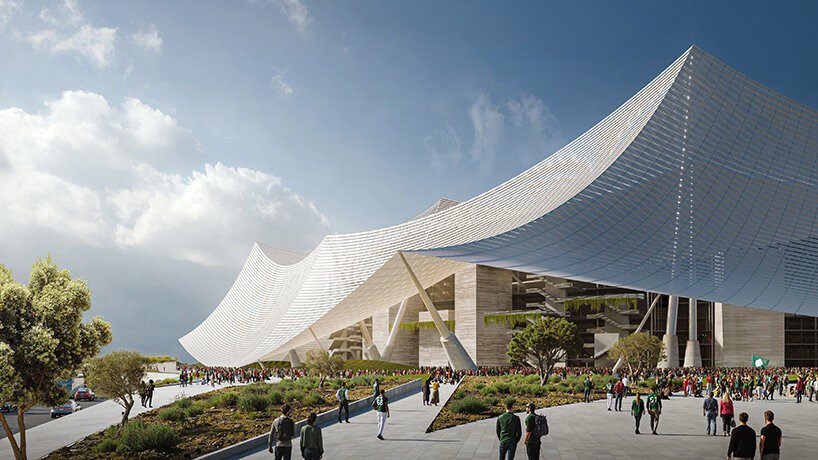
The Master Blueprint
| Feature | Specification | Impact on Football |
| Capacity | 115,000 Spectators | Becomes the largest dedicated football stadium in the world. |
| Roof Design | Translucent Aluminum Lattice | Creates a unique, high-atmosphere “acoustic pressure cooker” for matches. |
| End Stands | High-density 3-tier zones | Houses 60,000 general admission fans right at the edge of the pitch. |
| Core Footprint | 100-Hectare Sports Village | Blends matchday infrastructure with everyday athletic development. |
By fusing the ancient spirit of Moroccan hospitality with cutting-edge engineering, the Grand Stade Hassan II isn’t just waiting for the future of football to arrive, it is actively building a home for it.