Images by Adjaye Associates
As part of a new initiative that seems to rediscover the history of Benin City, the capital of Edo State in Nigeria. Adjaye Associates, a global renowned architectural firm led by Sir David Adjaye designed this project known as Edo Museum of West African Art (EMOWAA) a few years ago. A unique cultural and economic driven project which is now completely built in Benin City, Nigeria.
Six months ago, a politically mobilized crisis stole the momentum of the opening ceremony of the newly completed Museum of West African Art (MOWAA) as a surge numbers of protesters stormed the venue of the event that has dignitaries from all over the world in attendance, chanting war songs and destabilizing the progress of the event as the Nigerian security agencies quickly guided the dignitaries and all other attendants to safety. Following this development, His Excellency, the Executive Governor of Edo State Monday Okpebholo revoked the certificate of occupancy (C-of-O) which was initially issued to the Museum. The C-of-O revocation announcement came almost 24 hours after the tensions experienced at the opening ceremony and the initial exhibition of the museum. An event that welcomed foreign diplomats like the ambassadors of the European Union and Germany and others.

Project area view as it situated in Benin City, Nigeria
Buildace Magazine gathered that part of the reasons for the C-of-O revocation by current state government were public disagreement with the exclusive project, indicating objection from King Ezelekhae Ewuare II, the King of Benin, as a result of the demolition of the Central Hospital in the city to secure enough land for the museum, and other reasons, including irregularities.
According to Governor Okpebholo, in his revocation order, the land allocated to the museum (MOWAA) has been reclaimed by the state as a result of negligence of public interests and irregularities surrounding the project. He further promised that the land will be restored to its original public health purpose. The governor stated that his administration was not informed of the presence of some foreign delegations visiting the state for projects like MOWAA. To him, it was another example of irregularities that has trailed the museum project from the beginning.
In response, the Director of MOWAA Phillip Ihenacho described the situation as saddened, as he believes that this moment can lead to renewed dialogue that can help the parties with understanding to explore the full potential of MOWAA in representing Nigeria and Africa.
The question is how did all these come about? In architecture exclusive projects like MOWAA require serious consultations at the designing stage. You have to consult the state government, the monarchs, the community, and you have to travel to the region in order to understand the traditional building practice and the cultural heritage of the people etc. before designing.
Adjaye Associates, one of the global renowned architectural firms led by Sir. David Adjaye designed the project a few years ago and it was well praised globally as a bold step into reclaiming stolen African arts when the firm unveiled the design. What really happened along the line? The preliminary design for the new Edo Museum of West African Art (EMOWAA) was aimed to house West African Art and Artifacts, including the ‘Royal Collection’, the world’s most comprehensive display of Benin bronzes. In addition, galleries will be dedicated to contemporary arts, responding to and engaging with current issues and supporting the region’s contemporary arts community.

Upon completion, the aim was for it to be a major archaeology project as it started a few years ago, involving a wide range of partners including local communities, the Benin Royal Court, the Government of Edo State, and the National Commission for Museums and Monuments (NCMM). The archaeological excavation is part of an initiative called ‘Rediscovering the History of Benin’, as announced by the Legacy Restoration Trust (LRT), the British Museum and Adjaye Associates.
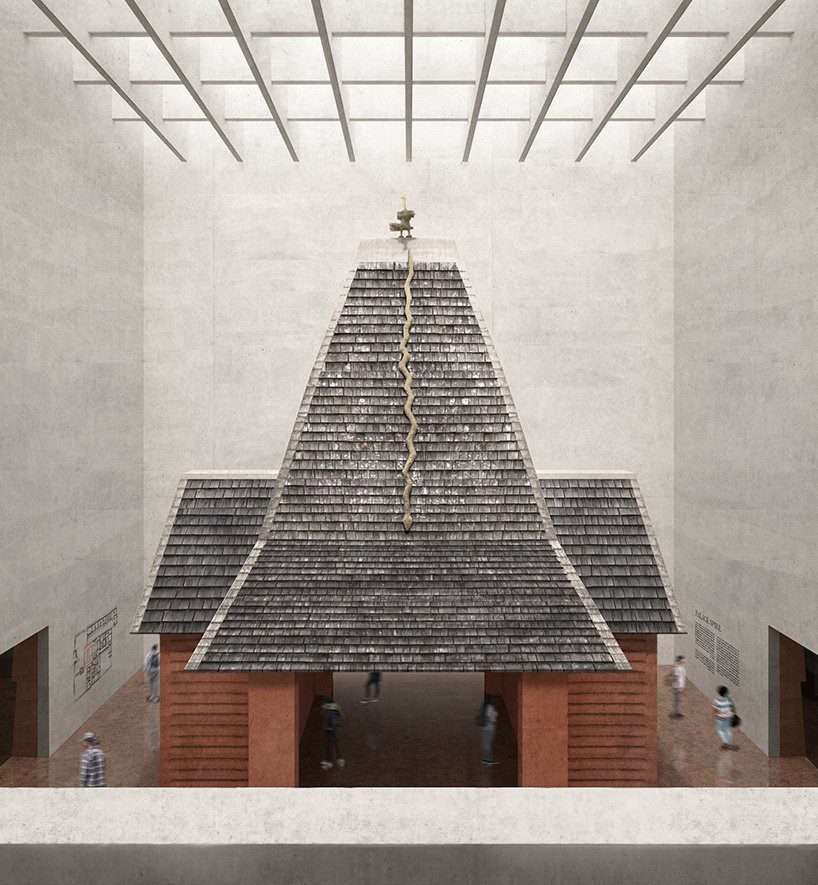
Adjaye Associates took the initial concept and urban planning work on the new museum, and assisted in the assembly of a team of professionals in Nigeria. The global architectural firm’s vision was to use archaeology as a way of connecting the new museum to the surrounding landscape, by regenerating and incorporating the surviving remains of the historic city’s walls, moats, and gates. The project also recognizes the significance value of the site’s existing archaeological remains. The foundations were being carefully excavated in order to prepare the site for the new museum building.

The historical museum draws inspiration from the region’s historical architectural styles, establishing its own courtyard in the form of a public garden that’s very effective for social activities, gatherings, ceremonies and events. Upon unveiling the design of the project a few years ago, Adjaye Associates stated that, ‘the galleries float above the gardens and are articulated by a series of elevated volumes an inversion of the courtyard typology within each of which sit pavilions which take their form from fragments of reconstructed historic compounds.’ ‘These fragments allow the objects themselves to be arranged in their pre-colonial context and offer visitors the opportunity to better understand the true significance of these artifacts within the traditions, political economy and rituals enshrined within the culture of Benin City.’

Inspired by the former Executive Governor of Edo State, His Excellency, Godwin Obaseki, the vision for the project was to realize a world-class museum, art gallery and research center that will popularly be known as the Edo Museum of West African Art (EMOWAA). Hence the idea for the archaeological project is a major part of a wider project that aims at revitalizing the cultural core of Benin City and to aid in its economic revitalization. According to former Governor Godwin Obaseki, ‘Benin City is an ancient city with an incredible richness of artifacts and ruins that could and should form the bedrock of a center for research, education in archaeology, art, curation and preservation.’

Sir David Adjaye expressed his excitement by stating that; ‘I am humbled and deeply inspired to design the new EMOWAA, a project that will establish a new museum paradigm for Africa.’ ‘From an initial glance at the preliminary design concept, one might believe this is a traditional museum but, really, what we are proposing is an undoing of the objectification that has happened in the west through full reconstruction. Applying our research into Benin’s extraordinary ruins, the city’s orthogonal walls and its courtyard networks, the museum design reconstructs the inhabitation of these forms as pavilions that enable the recontextualization of artifacts. decoupling from the western museum model, the EMOWAA will perform as a reteaching tool, a place for recalling lost collective memories of the past to instill an understanding of the magnitude and importance of these civilizations and cultures.’

Floor plan /Level 0
The timely construction of the museum lasted for five years. The starting point involves extensive consultations with, and input from, local stakeholders, residents, historians, artists and members of craft guilds in a series of workshops. This helped in establishing local priorities and interests as the first archaeological work includes surveys of the museum site and the wider surroundings (LIDAR and geophysical surveys), the logic was to fully understand the sub-surface remains and to help target excavations. Focusing on excavations and fieldwork at the new museum site and in its close surroundings will create value for the excavated objects to become part of the museum’s collections and displays, as the plan for all objects was to remain in Nigeria.

Floor plan /Level +1

Roof plan

Section

Section
Project Info:
Name:Edo Museum Of West African Art (EMOWAA)Location:Benin City, Nigeria
Architect: Adjaye Associates
Status: Completed